Carol Shields is an extraordinary writer.
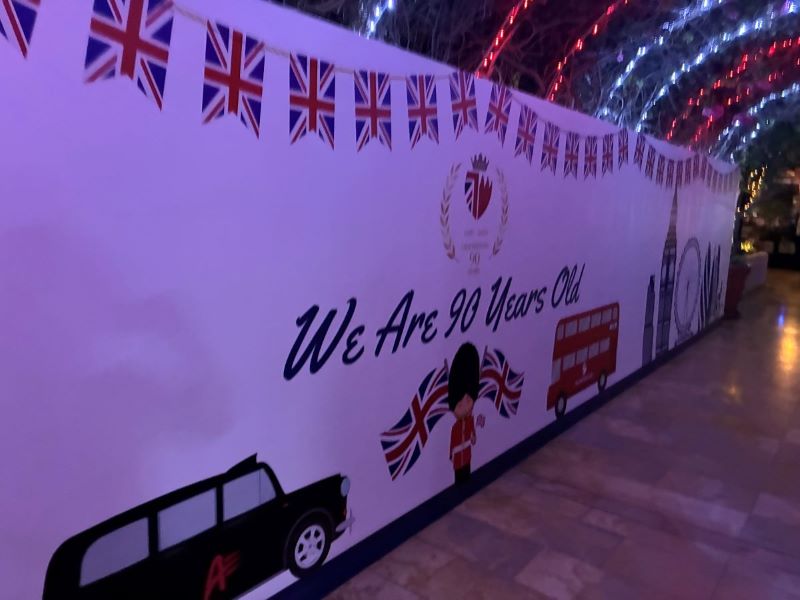
I came across her work one evening at the Brit Club. We’d been invited by a fellow Brit, whose partner was leaving the kingdom, for another, namely Riyadh. We’d had food, in the courtyard, presented gifts, and I paused for the bathroom, on my way astonished to find shelves, inhabited, no squashed, with hundreds of books, lined densely, row upon row and on top of each other, along the dark corridor opposite the tennis court. From crime fiction to encyclopedias, thrillers to self-help books, romance, history, historical fiction and fantasy (not many of those; this seems to be a recent phenomenon), I couldn’t believe my eyes.
There’s something, isn’t there?— about running your fingers along used books, exploring their titled spines, their war-torn edges: they tell a life …. not only from the pages within, but a mirrored one from past owners—who are/were they?—I find myself asking—and what are they doing now?? What brought them to this book, compelled them to pick it up, then gift it to the bookshelves here in Manama, Bahrain?
Whatever their reason, I was thankful, as my eyes settled on Carol Shields’ Collected Stories, a pale covered book, and thick: 3 volumes, including The Orange Fish and Various Miracles.
‘New Music’, a story from her Dressing up for the Carnival, 2000 collection, caught my eye: A man (unnamed narrator), spots a girl, quirky, on a train, engrossed in her musical sheets. He enquires about her work, which, she tells him is on the composer Thomas Tallis, the shadow genius to William Byrd. He says: ‘Why him, if the latter is better?’—to which she replies: ‘Do you always insist on the very best? It’s because I believe Tallis is second-best that I prefer him.’ He immediately falls in love with her (of course): ‘the way she opened her mouth and said Tallis is second best’.
Encounters are there to intrigue us—it is the very stuff of fiction, where ideas collide and truth emerges, plus, as writers (or readers), it isn’t until we become immersed and our characters begin to speak, really express themselves, especially to one another, that we begin to understand our stories’ real themes …
Often one begins with an image, or more likely a person to hook the narrative on—in Shields’ case this awkward narrator who, for whatever reason, feels he’s second, fifth, sixth, a hundredth best—reading the way he describes himself: ‘He was conscious of his ignorance and inability to express himself’, and ‘‘ ‘I do, I do,’ he exclaimed in his awful voice.’’
Shields has them marry, and he supports her—a husband with their now three children, in the background, as she studies throughout the days, for four years—‘they missing her rhubarb crumble, the feel of ironed clothes and clean sheets and socks sorted into pairs’—as she listens to Tallis’s music, permeating ‘the carpets and plaster, clinging to the family hair and clothing and gets into the food’, towards her doctorate’s thesis’s end.
And when she does come out of it, filling her new void with house re-sorting, husband/children attention giving, she wonders—observing him now in a new light—what it means to be ‘better or best’. Shields has her then explore the more notable William Byrd, to find out.
Now, metaphorically, you can make of this what you want—male/female societal roles? (I hadn’t thought of this till this point, so engrossed was I in the ‘better or best’ question!)— ambition, is it? Career? Or how, why and what propels us to choose our life’s other?? What we learn from our life’s choices?— grow from them, and move on?
The latter, I think, although not overtly expressed in Shields’s story, is what stood out for me: her ‘second best’ eagerness to explore the flawed, perhaps, and side with the underdog—
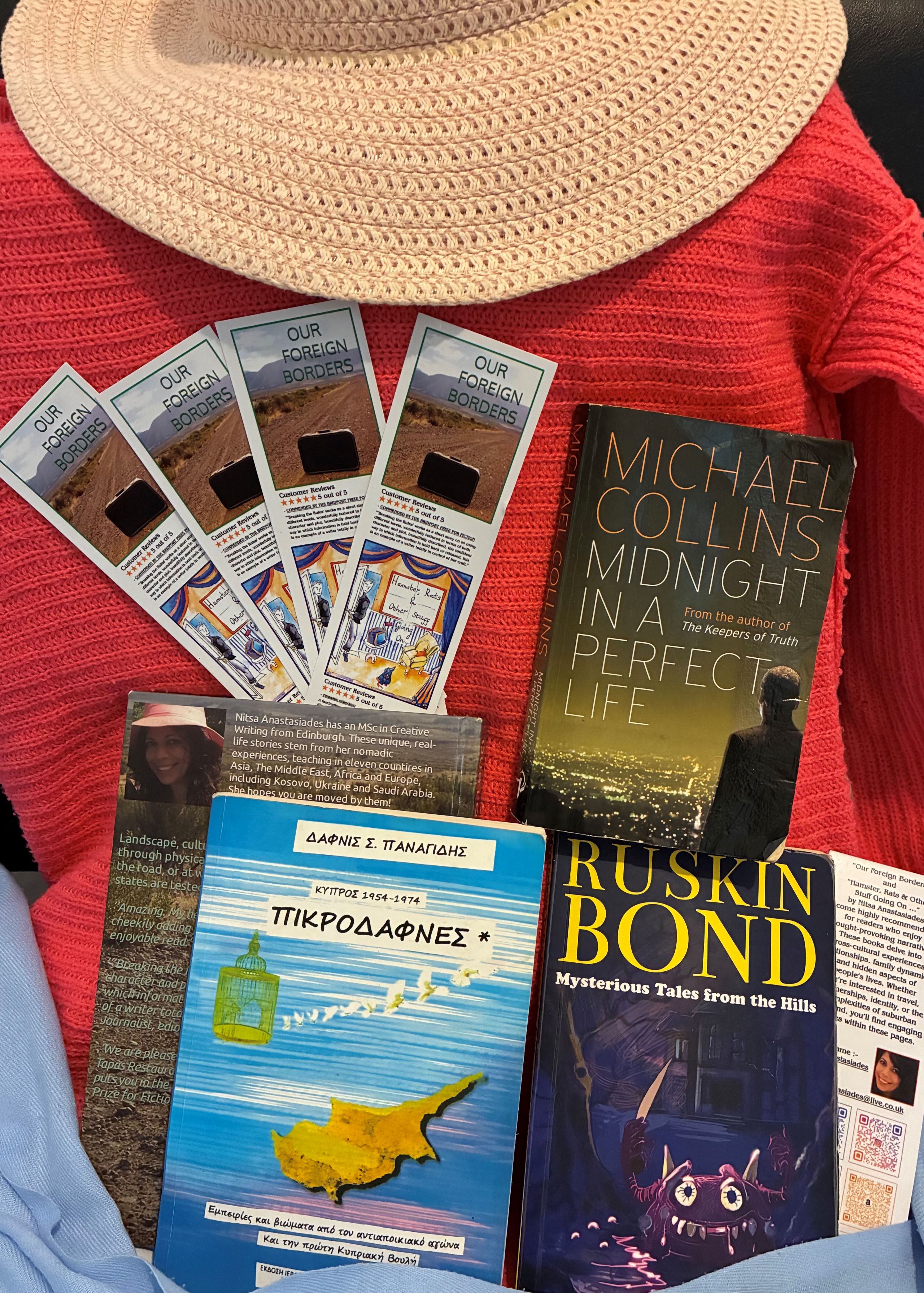
‘Yet, to this day, I still can’t quite pinpoint the significance of that date and why it enters my head so frequently, and especially why I’d said, ‘‘Yes’’ so readily to that boy with the dandruff and the greasy hair and the crooked teeth, that were yellow—who still works, as it happens, for Leylie’s Insurance Brokers around the corner from the post office where I’m now manager, but if I work it out, I’ll say…’ (‘That Date with the Boy at the Tapas Restaurant…’ Bridport Prize commended, in Our Foreign Borders, N. Anastasiades)— my memory just went to …
‘Opposites attract’ you may want to call it, and I’ve always been fascinated by how and why couples come together who are so very different … be it in age, sex, size, height, sound, mannerisms, and—especially—mindset, intellectual thinking. Another of my stories, ‘Sea’, from the same collection, explores a couple, this time from different cultures: ‘’A young Philippina joins an aspiring British and middle-aged novelist near a haunted Arabian seaside village (Al Hamra, where I’ve lived in the UAE), where wildlife from their homelands collides, reminding them of their past, with future warnings.’’
Extracts:
‘‘He felt a hand rest softly on his back and saw that she was there beside him.
‘It’s so quiet here,’ she said, her drink on the wall next to his. ‘It’s a bit like—’
‘It’s very peaceful,’ he corrected her. ‘And not quite as much humidity.’ He knew she was referring to her island, her homeland.
She sighed, leaned forward, and pointed to the water excitedly. ‘Hey, they are like kingfisher, look,’ shielding her face from the sun.
‘Different beaks,’ he said, then didn’t know why he said it.
They’d visited her island, Boracay, before moving there, and had spotted a rare and unique bird to the kingfisher species: an albino.
Not unlike the Leucistic Kingfisher variety, who too, can’t deposit melanin in their feathers, the albino—she pointed out to him—was more vulnerable to prey because of its beak and also its feet being so pale. In addition, he learned the Dwarf Kingfisher—a peacock-hued variant from the same family, with egg-yolk for its belly, and cobalt sky for its back—was now threatened, because of the new housing developments propelling across the lowlands. The kingfisher’s sweet song, she told him, reminded her of a toy bird she’d had as a child, its calling, comforting. And, she said, their unique rainforest sighting together, was considered lucky, by all.
She made a growling face and clawed her hands at him. ‘Kingfisher more ferocious than gull, anyway,’ pushing her snout down, as if plunging below water. ‘Aargh!’
He smiled a knowing smile and gathered her bare waist to him. The seagulls rose and fell, swerved and crossed each other ahead of them.
‘How come we don’t hear them from over here?’ she said, staring out. ‘What are they doing out there, and so many of them?’
Interestingly, Olivia Albiero (Literature and narrative scholar) talks about ‘rupture’ in storytelling, relating it to a ‘traumatic event’ and our desire as readers and writers to mend, or at least shine on it some hope.
Conflict, we call it nowadays. And characters’ renewed, changed—refreshed towards the end, personalities. How boring.
But what if the ‘rupture’, is where the real stuff is? The flawed, the asymmetric, the passed around, dogeared pages of vastly read books; the downright boot trodden and broken nosed coming together of people one never predicted would?
Would you still be wanting a field of lilies and dandelions?
In Shields’ New Music (spoiler alert), the characters stay together, shifting in their realization of what their position in a relationship actually is, knowing who they are as separate individuals, not as an engrained and unchippable piece.
Perhaps that is why I love so the used book, the book passed around different hands, worlds, homes, minds: each adding his and her own mindset, their psychology and interpretation, their world, which with their very imprint seals on it their sweat for good.
Plus, in a world where symmetry, the perfect shining book cover and physical plumped up imagery is championed and valued over all … which do you prefer? The ‘better’?—or the so called … ‘best’? Interested to hear your thoughts.
Nitsa writes about landscape, culture, writing and books and other lands. Relationships, where people crossing physical and emotional borders, meet. And poetry. Visit her website: nitsawrite.com to get more extracts from ‘Our Foreign Borders’ global, and British tales.
Copyright © 2026 Nitsa Anastasiades All rights reserved. Written content, photos and images may not be not be copied, distributed or used without permission from the author.