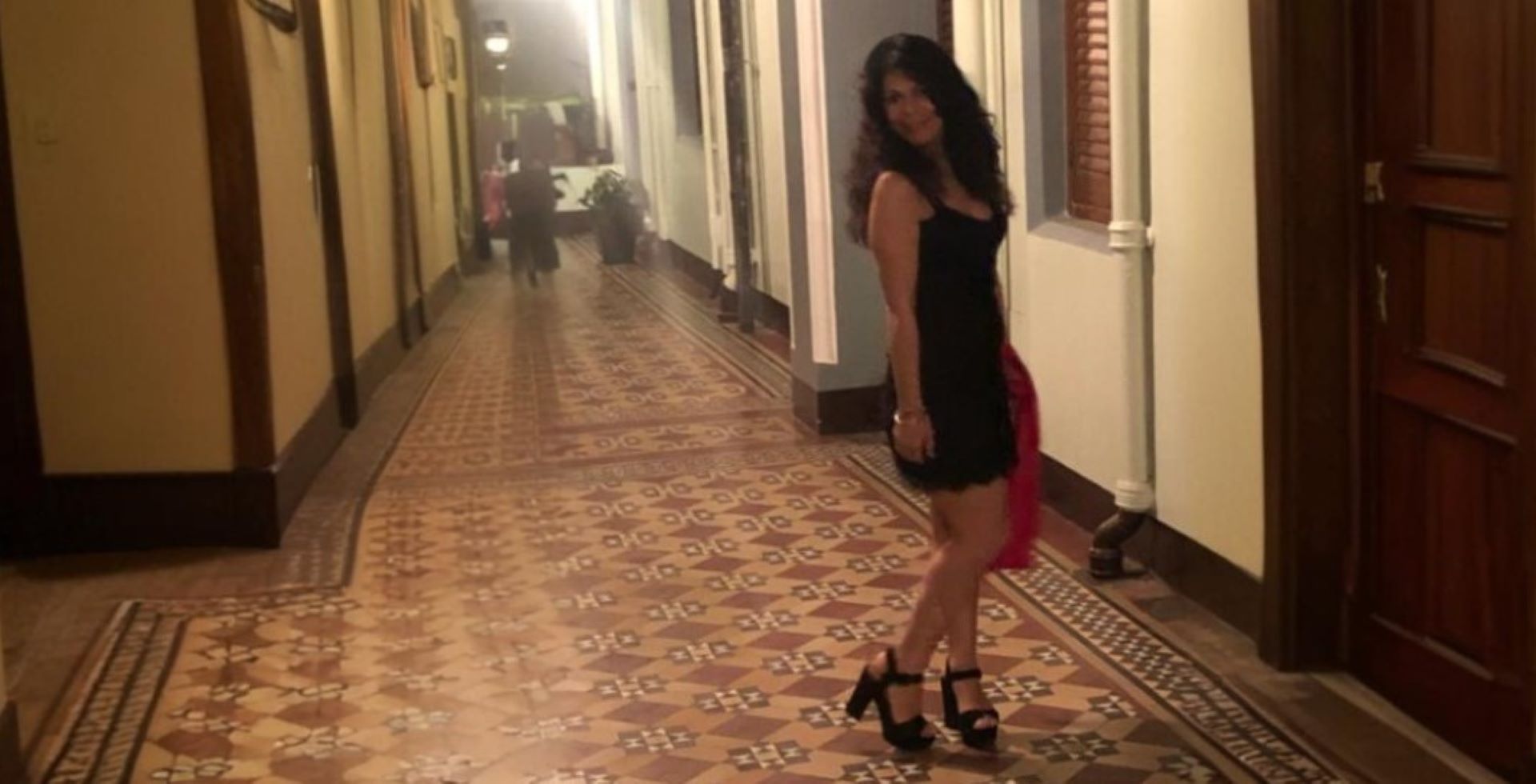
There’s a writer on Substack who occasionally infuriates me with his (as I see them) degrading comments on women, blaming cultural imbalances in society (I’m not sure which societies/where: one cannot put a blanket over all) on their desires to conquer men. Immediately my hackles are raised since the society/culture I grew up in was nothing but: men sat at one end of the table, women the other— same in church where women were not permitted to wear trousers, men’s egos danced around, food brought to them, in case they got ‘angry’, sometimes revered for this—after all ‘he is the stylosou tou sbitiou —column of the house’. Yet, family was strong, and if one was lucky to own a loving father, brother, husband, grandfather (and vocal mother), who supported females’ dreams and career aspirations with dialogue and consideration in the mix—together with clear gender roles and responsibilities in the home—cha-ching!! One struck gold.
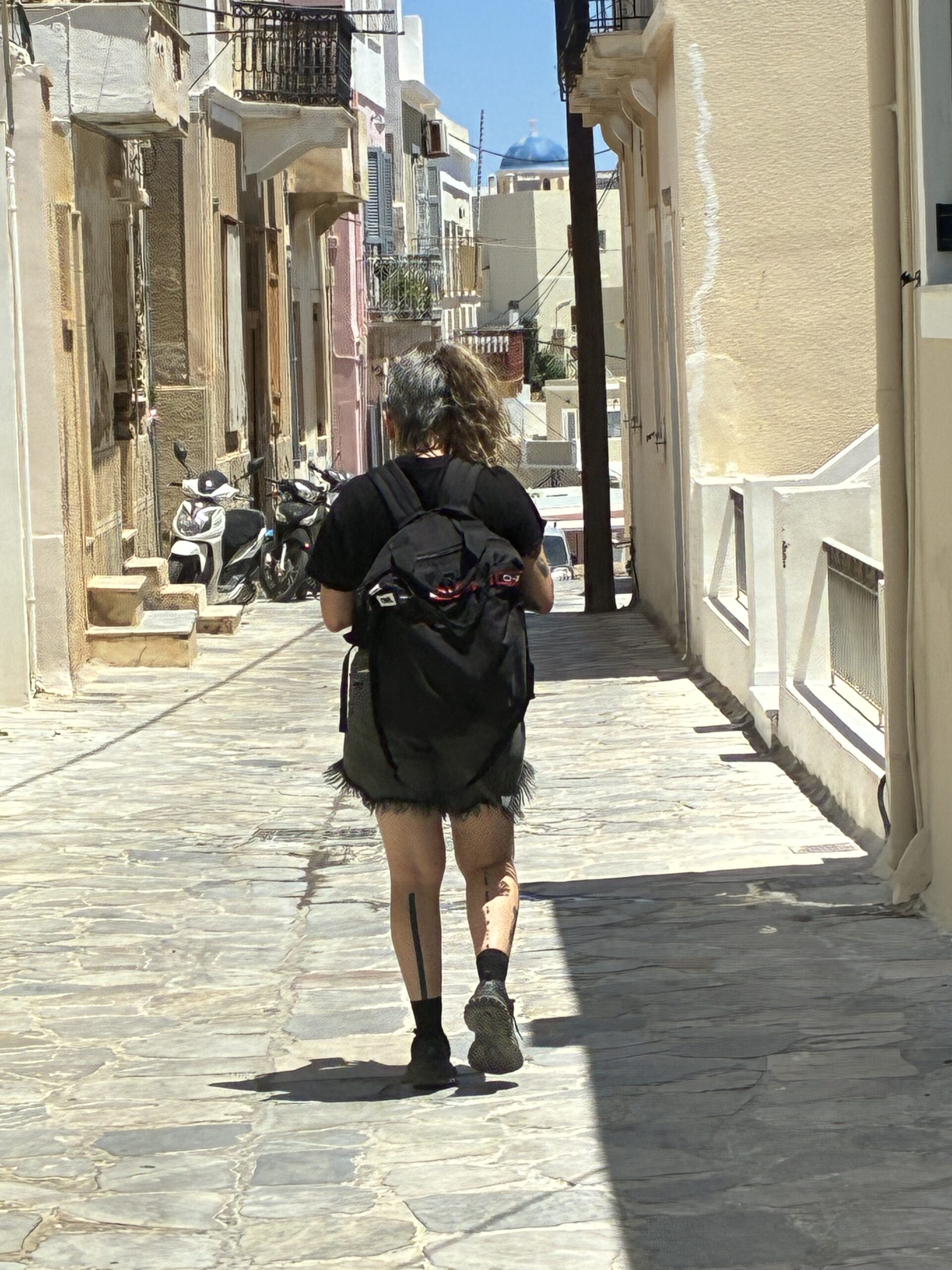
But on my recent trip to Athens, Exarheia (last time I visited was 2020—Omonia: the economy poor, homeless; streets run down), graffiti was rife. Gorgeous little townhouses, alleyways and cafes, side streets and restaurants, bars and bougainvillea walls, shopfronts—nothing was left to chance: all plastered in ‘Free Palestine’, ‘We want immigrants’, ‘children are being killed’, ‘f**k tourists and your retro dress’, ‘no to Airbnb’, ‘Get out’. From my tiny accommodation with a stupendous view of the Parthenon one end and Saint George Chapel on Lykavittos hill, the other, Athens’s balconied city and Aegean (my goodness me, isn’t his what Greece is about?) in the distance, for two days I roamed as an Athenian, drank with them coffee, ate Cretan, drank water, tried to sink into it, the urban art dense and enveloping like the arms of a tattooed god artist squeezing in, in: same sex couples kissing in the street (marriage for, was legalized in 2024), women dressed like men, enormous tattoos like stamps on their legs, arms, heads shaved one side, piercings, and what happened to our gorgeous men?—effeminate (of course not all, but several, in this space), and not a child in sight. Most, I’d say were in their thirties/early forties, and the very few male/female couples I observed were above that.
Marriage between man and woman in Greece has halved since the 1980’s, many opting for an independent lifestyle, childfree, with focus on career. It’s not surprising, therefore, but also interesting—with more tertiary education opportunities—her universities’ graduates (a fourfold increase in the last forty years) are mainly female.
A bartender I spoke to, who said, ‘Are you from Cyprus?’—they can tell from our accent, our ancient Greek words—came to study twenty five years ago and never went back; single, and ‘so far’ she said, she likes it—
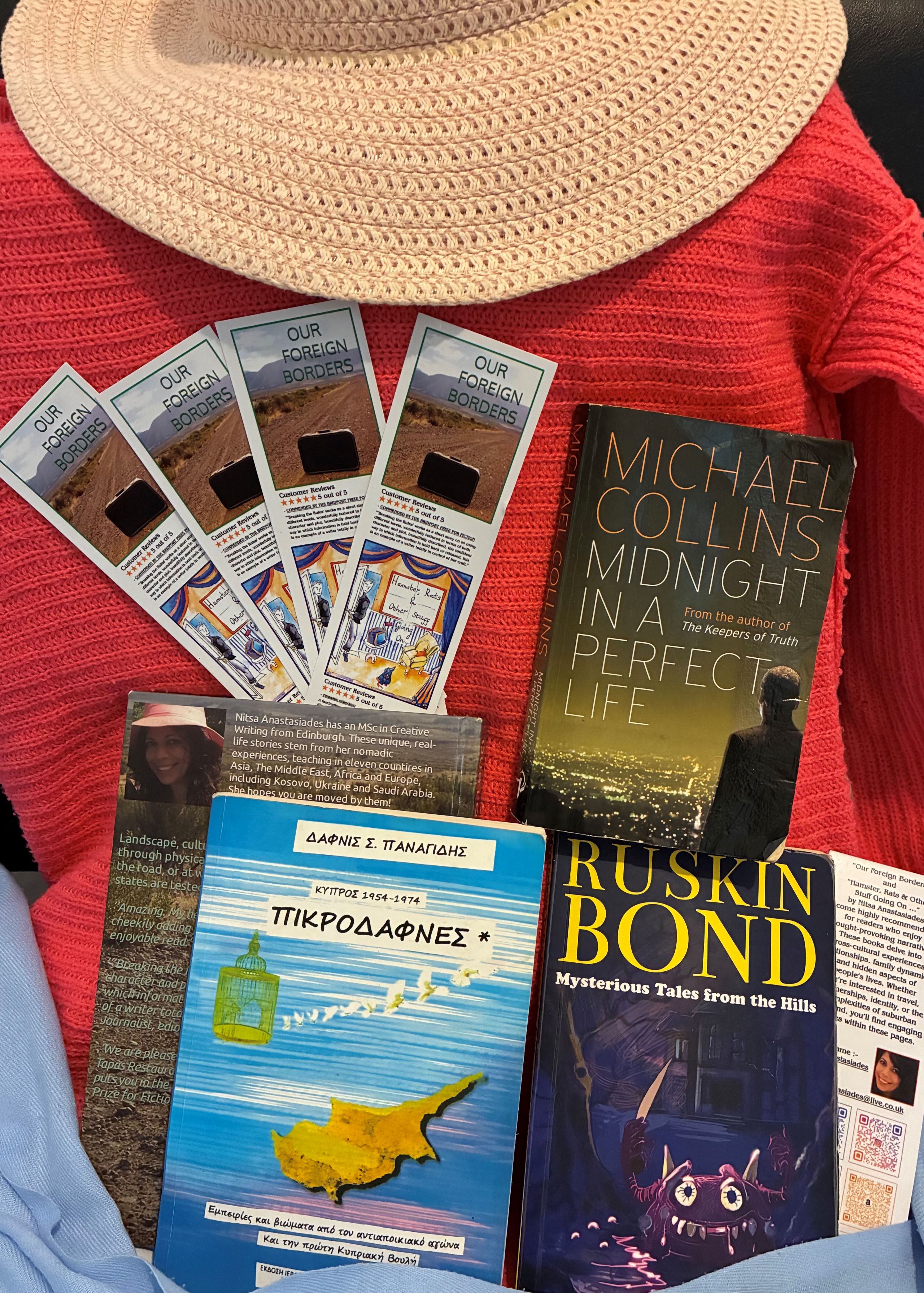
Athenians, as all Greeks, and many other nations, I’m sure, enjoy a debate. Miller’s point in his travel book The Colossus of Maroussi (I bought here), re his friend, the intellectual Katsimbalis he meets: ‘‘ never came directly to the point. He circled it, approached it from behind, from the sides, from above and below, until finally, when you had given up hope, he pounced on it like a cat on a mouse.’’, is so apt, as is, ‘‘The Greeks are always in the middle of a discussion, even when they are silent.’’—a joy to watch, I have to say, same sex, mixed groups conversing, or sitting; just thinking, debating, and adding, no mobile phone in sight. The Greek spirit is a vocal one, as could be witnessed in last week’s antiwar concert on Syros island: ‘Freedom for Palestinians is freedom for humanity’ musicians sang to huge crowd. Perhaps that’s why policemen stood on corners in groups in all areas of Athens with their shields—the city vibrates with its need to have issues to debate, ‘wrongs’ to switch around, in order for it to go on.
But with lowering birth rates, changes in attitudes, migration and commune style living amongst the ‘free’, gay, non-binary, straight and unattached, one wonders where, for Greece, this is heading. On Syros island, I was happy to see, the square, in front of the late 19thth century townhall preserved, families—children on scooters roaming at sunset, boys kicking a football, teenage girls in huddles, excited, boys in their groups, striding around, the Greek Orthodox/Catholic Saint Anastasiades of the Resurrection of Christ towering, like the Basilica Sacré-Cœur in Paris, above them (and I enjoyed chatting to a lady at the beach who was eating clams she just caught, a habit from childhood, she said, and the people here are good, still, not like the other money grabbing … we islanders support each other).
Because when all is said and done, and don’t get me wrong—I’m for people owning their own identities, choosing their lives’ paths, fulfilling their dreams, purpose and potential and sometimes it isn’t always marriage—goodness knows the world/travel stories in my Our Foreign Borders book is littered with explorations of cultural identity, the sexes and injustices, and a pretty tattoo here and there for women, tasteful choices for men … eh, as the Cypriot Greeks say, tut, oraia en je touta, ‘nice’ too can be these…but, look—
Societies, we see, are built, torn down, it seems, to allow for (some say) inevitable and new developments, but with it comes erosion, if we’re not careful, of a country built on history, culture; battles, a rich heritage, and solid identity. And why should this concern us? Can’t we go on? Embrace the change? Go with the flow? And, yes—we know one must shout, resist, defy to show that one exists, but please— before you go dye your hair blue, attach a loop chain from your ear to your other earing; take a paint spray can at night, or stick a pineapple on your head—go into the Greek wilderness (preferably the Cyclades and windy islands kind), visit a monument, read a philosopher’s book or two and really listen to the sea. You might find your answers.
Copyright © 2025 Nitsa Anastasiades All rights reserved. Written content, photos and images may not be not be copied, distributed or used without the author’s permission.