Explore
by Nitsa Anastasiades
I’ve never been one for romantic fiction, in fact the books I go for are based in the real life; stories about anguish bore me, perhaps it’s the simple premise of two people yearning for each other … just too simplistic. I like character driven narratives, plots which are unusual, a little off – showing the hidden or unexpected depths inside humanity.
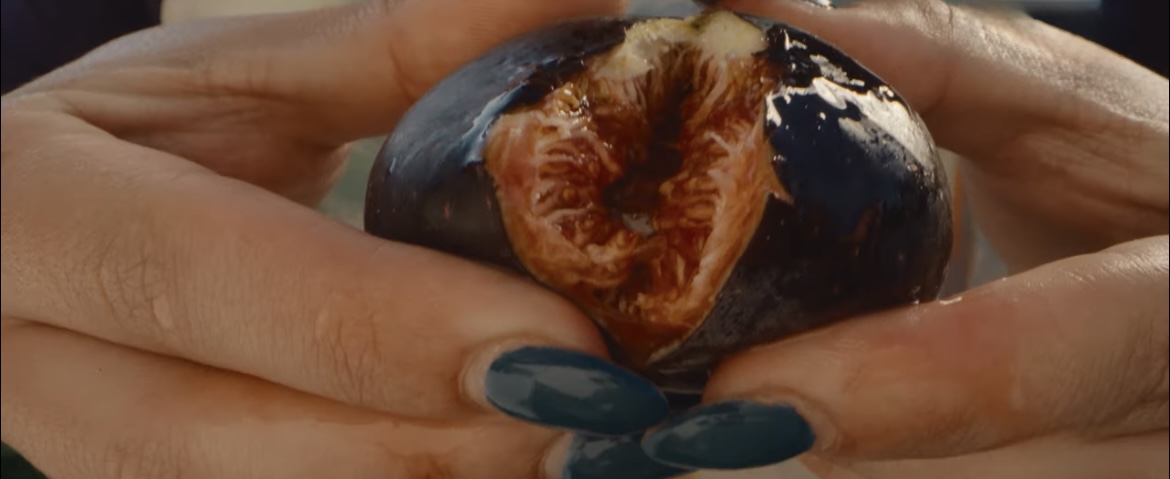
I’m reminded of a film I recently watched—Delicious!—on Netflix. A rich German family going on vacation to their summer, in France, house, faces first division—not only because of street demonstrations—poor protesting against the wealthy—but also because they are ‘set up’ by a supposed gang of young, attractive people who trick them so they can enter their house, their world…
You’re thinking, they’re going to sabotage them, right? Tie them up, get them to deposit all they own, and more, into their bank accounts and kill them. Well, the latter (partly) is true, but as two thirds of the film concentrates (and I must say, grippingly), on the gang in very persuasive ways, alluring the husband, wife and teenage daughter, their son, to their side, the audience are bursting—with only fifteen or so minutes of an hour and forty minute movie to go—to learn, finally, how this family will pay for being ‘rich’.
The characters have their own motivations; distinct appearance, unique ways of speaking, moving, dressing and interacting with their environment, as all good storytelling, we know, should, and the visual landscape: roads, grand house, gardens, beach, dance club, embody and reflect human emotion mostly implicitly. And although the ending is rather silly (we learn, yes, that they are not thieves, but cannibals: they eat the family … mmh, anyone recall Chekhov’s gun? One should plant it early on?—or drip-feed something, theoretically, a speck?— if a murder, or attempt at one, at least, is on the horizon), the plot is still unusual.
But back to love. I came to write this having just finished listening to Dostoevsky’s White Nights, a short tale, or as labelled on Audible: ‘A sentimental story from the diary of a dreamer’, recommended on Google; it popped up and I thought, Yes. Like sorbet, one has to clear one’s literary palette, flitting between The Goldfinch (Donna Tart) and Hiiragi’s Lantern of Lost Memories, so listen I did …
‘I am a dreamer. I know so little of real life that I just can’t help re-living such moments as these in my dreams, for such moments are something I have very rarely experienced.’
“May your sky always be clear, may your dear smile always be bright and happy, and may you be forever blessed for that moment of bliss and happiness which you gave to another lonely and grateful heart.”
Interestingly, isolating now these narrator confessions to a woman he’s just met renders them heartfelt, but when many more tumble on top of each other, with not much else, one gets a little tired of ‘Oh, no’ and ‘Yes, yes.’ And finally, explicitly: “I love you, Nastenka. There—I said it! I couldn’t keep it inside any longer. I had to tell you.”
A creative writing tutor and dear mentor, Monique Roffey, once told me never to say I love you in fiction, which I’ve not yet, only in my Our Foreign Borders collection, story: ‘Memories from O’D-of-A’ (Oh Daniel of Arabia) did a female narrator, trapped on a foreign compound in the fictional Jubaiyt, blurt out to her friend: ‘But I love him’—to which her friend replied: ‘You don’t love him’, you just love the ‘‘idea’’ of him’, which, I think, says a lot more about the relationships all round, than three direct words that may just hang there. Of course, context, what came before—how much we know about and invest in the characters—and after, plays a part, showcasing the old phrase, or song: Love takes time …
But in Dostoevsky’s case, and over the course of four nights, passion or angst remains high, and one must remember its publication date:1848, with Russia’s social, political unrest and humanity’s search for deeper meaning.
Jane Austen, in contrast, thirty five or so years earlier, did it with sarcasm and wit throughout her novels, eg. Pride & Prejudice, Elizabeth:
‘Everything nourishes what is strong already (in answer to Darcy’s ‘poetry as the food of love’ statement). But if it be only a slight, thin sort of inclination, I am convinced that one good sonnet will starve it entirely away.’
Then Chekhov (I adore), seventy years on, skillfully, through show, don’t tell:
‘He felt as if he had suddenly grown younger, as if life had just begun anew’
You’re feeling…??
In Delicious love is explored through it absence—it’s distance, the lack of it, that ugly, often, antagonistic…for it wasn’t till the movie’s end, when the German couple shamed each other’s habits and treatment of one other in public, and were exposed to alternative and very strange possibilities, did their transparent love (or their interpretation of it, for they were very different people), actually suffice. Contrary to Dostoevsky’s narrator with his love interest, their initial exchange, after they’d picked up a lying, evil-intended bleeding teenager on the roadside pretending to have been hit by them after their family dinner out, was: ‘That’s why you shouldn’t drink and drive …’ and he: ‘Well, you could have told me not to.’. Up until that point, they hadn’t spoken to each other. But now we get who ‘loves’ who, or at least who longs for who more—
Romantic fiction …two people, a happy setting, their ups and downs and preferences, escapism and fantasy, their little challenges and happy lives—for me, it’s not enough.
But give me Boulder, by Eva Baltasar, with crazy setting and strange identities and hidden subtext, with prose that stings, psyches examined, and jagged endings, testing our own beliefs, and now you’re talking. Or On Chesil Beach, Ian Mc Ewan; explores relationships, marriage and sex in 60’s England, with its taboos and social class and expectations. Or Collette Paul’s: Whoever You choose to Love—a Glaswegian take in all its forms from disappointment, to power, imperfections and memory. Or Toni Morison’s Love—with a community’s obsession over dead man, Cosey; power and jealousy, obsession and lust whose secrets even the waves, decades on, speak of. But—prove me wrong.
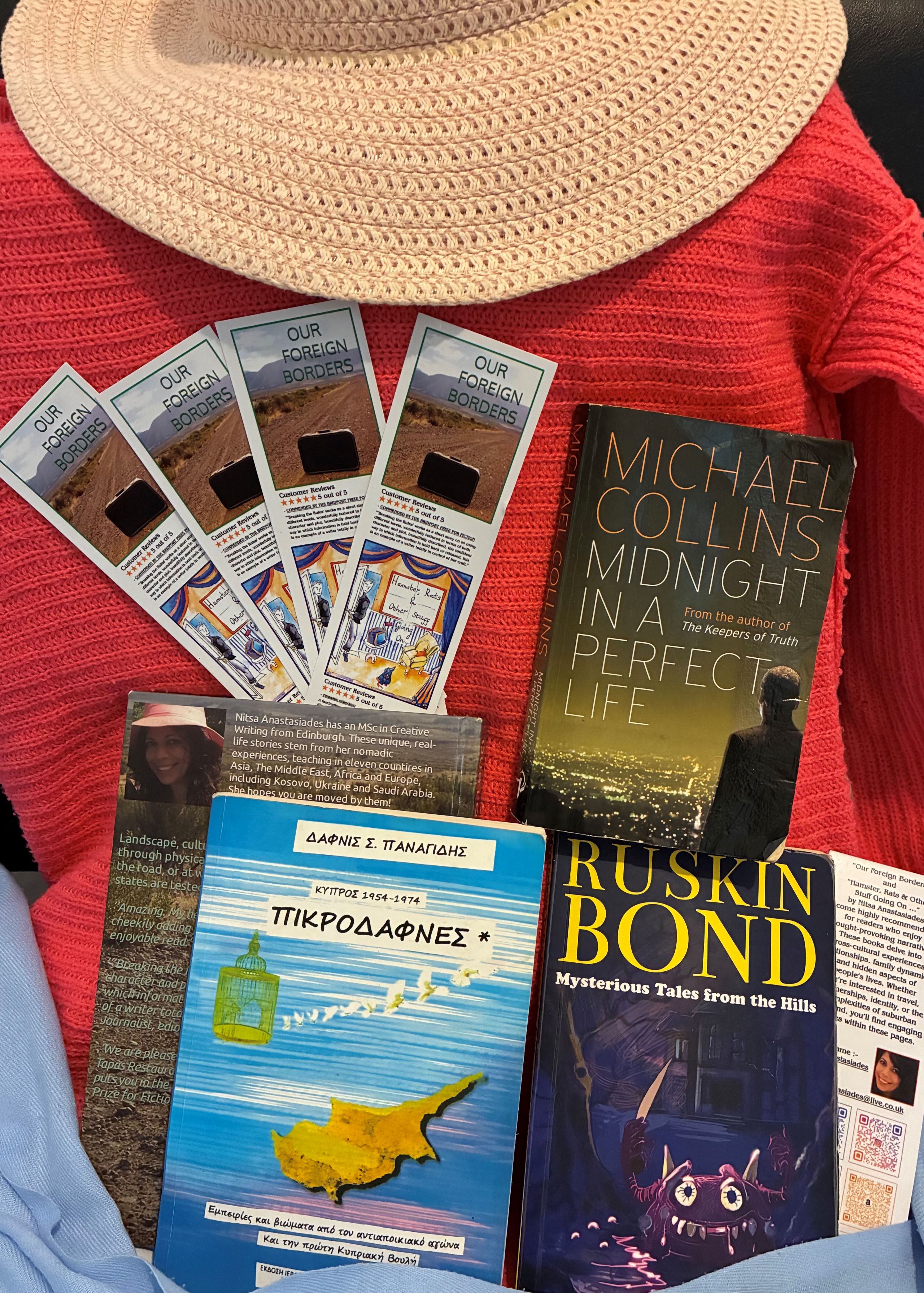
Nitsa Anastasiades is author of Our Foreign Borders, a story collection in places around the world, including Ras Al Khaima’s Al Hamara in the UAE, an alleged haunted sea-side village where she lived and wrote story: ‘Sea’ where lovers meet, homelands collide revealing past and future truths … Available in Paperback, Hardback eBook @ nitsawrite.com
Copyright © 2025 Nitsa Anastasiades All rights reserved. Written content, photos and images may not be not be copied, distributed or used without permission from the author.